 So we still aren't sure who Sonja looks more like, Jenn or me... But we both agree that she has my hair style and Jenn's hair color
 So we still aren't sure who Sonja looks more like, Jenn or me... But we both agree that she has my hair style and Jenn's hair color
 Not everything in life is easy. Raising a baby, it turns out, is one of those things. Sonja must have a little runner gene in her because last night she was sleeping in fartlek fashion. That is to say, instead of a nice continuous sleeping pattern we had the more variable variant - 2.5 hours, 1.5 hours, 1 hour, .5 hours... I am certain that this means she is gearing up for some marathon sleeping sessions in the coming months. Training is never easy.
 Sonja gave me a hug for an hour... it was awesome. It makes the hours of crying and screaming seem insignificant. More photos at the kodak site for those who care click here
 It's said - God made dirt
 I had to buy this onesie for Sonja. We really didn't need more outfits but I couldn't resist since she has the sticky uppy hair just like daddy does... hard to tell from the photo but she is also wearing a little barrett that daddy put in for her : )
 Okay, I was going to just download the images off of the camera and then head to bed but I found this one there and just had to add it... Thanks sweetie for taking the picture!

 The ads are located at the top of the page and under the link section. Apparently Google will pay me a percentage of their ad revenue for clicks on ads on my page. I tested it out yesterday and it looks like I get about $0.23 per ad click. The great part is that you don't have to buy anything; all you have to do is click on an ad and wham-o - $0.23 towards Sonja's future education. Currently with $0.65 in the bank she will be able to afford a stamp to apply to Arthur Murray's School of Dance, but I have to start somewhere.

 Okay, enough with the video clips already. How about some good ol' fashioned words. I know I have gone on a bit of a tear with the video clips as of late, but it is the easiest way to show off baby.


 Name: Sonja


 I am uncertain if this is an irrational desire or a rational one, but every now and again I get a nagging feeling that I should build something. This feeling somewhere in my gut that I should saw, drill, nail, sand, varnish, create. The problem with this feeling is two-fold: first, the urge is not very specific as to what I should build; second, I have a very limited skill set for actually building anything.

 Jenn and I had another baby class over the weekend. Our first was on the birthing process. The class was 8 hours long and very detailed. This weekends class was called all about baby. Its intent was to give some guidance as to the rearing of a baby after first-time parent head home from the hospital. This class was 4 hours long.
 The Wal-Mart Effect by Charles Fishman examines how
Indeed, the book opens with a remarkable example of how Wal-Mart’s drive for low prices helps to save millions of trees. Prior to 1990 when you bought deodorant it came packaged in a cardboard box. Wal-Mart, in its quest to keep costs low for their customers, saw the box as an item that was really just waste. It added cost to the product but no value. Generally everything that was printed on the box was also printed on the plastic container of deodorant inside the box. The first thing the customer did when they got the deodorant home was to tear open the package and discard the box. The box added extra weight in shipping the product. The box was waste and it had to go. So, Wal-Mart asked its antiperspirant suppliers to leave out the box. This one seemingly small change saved millions of trees. Perhaps my loathing of Wal-Mart had been misplaced. My curiosity was piqued.
As I worked my way through the book many things jumped out at me – for instance, the size of Wal-Mart. I had always known Wal-Mart was big, but it took some facts and figures to really put it in perspective for me.
According to Fishman this huge scale is what makes “the Wal-Mart effect” so powerful. It’s the huge volume of products sold through Wal-Mart stores that enables them to pressure deodorant suppliers (as well as all their many other suppliers) to change the way they do business.
As I read on I begin to see Wal-Mart in a more neutral light. No longer did they seem to be the evil despots of capitalism, but rather just a very successful business which, unlike many corporations, strives to keep their costs low so they can pass that savings along to their customers. Indeed, I was surprised by the apparent absence of any sort of corporate greed. The book doesn’t talk about lavish birthday parties thrown for executives’ wives on strange exotic islands. In fact, just the opposite comes out in this book. The absolute austerity of the Wal-Mart corporate community took me by surprise.
Fishman writes about corporate offices furnished with lawn chairs likely left behind by some potential supplier to Wal-Mart. He goes on to tell us how many of the executives bring office supplies from home to help keep costs down. I began to feel my anti-Wal-Mart position fade a little bit. I found myself feeling a strange affinity for this mega-retailer. It was refreshing to see a wildly successful company not acting like it. Here is Wal-Mart, the most dominate retailer in the
So what’s the catch? Why have I thought ill of Wal-Mart for so many years? There had to be something I was missing. As I continued to read Fishman pointed it out that there is, indeed, a catch.
“People say Wal-Mart is making $10 billion a year. But that’s not how the people inside the company think of it. If you spent a dollar, the question was, how many dollars of merchandise do you have to sell to make that $1? For us, it was $35.” – Ron Loveless, one of Sam Walton’s early managers (p.23)
Wal-Mart sells its goods at razor thin margins. This is the philosophy which has propelled them to the top. The problem with operating under razor thin margins is that a company is forced to turn a profit by selling large volumes of its goods, which can have unintended consequences.
Fishman provides a good example of some of the problems that low margin/high volume items can present. Wal-Mart sells Atlantic salmon fish fillets for $4.84 per pound. Not too many years back salmon sold for $15 to $20 per pound. What happened to make this fish so affordable? Salmon farming happened. The ability to raise fish within a controlled environment within the ocean enabled fish farms to spring up. These farms allow huge quantities of salmon to be produced. This massive worldwide increase in the supply of salmon has helped to push the cost of salmon down year after year. Still, Wal-Mart sells it for less than the competition.
This dynamic is possible because of the scale that Wal-Mart brings to bear on the marketplace. In fact, salmon farming is the second largest export industry for
If Wal-Mart were to purchase the salmon from a
As I continued reading I happened upon another interesting bit of information. Despite Wal-Mart’s dominance across a wide array of consumer goods, the
The book ends with Fishman making a call for more openness and transparency for all corporations, noting that Wal-Mart, as well as most major
Although the book does not directly call for the break-up of Wal-Mart under Anti-trust laws, it does reference the break-up of AT&T as means of illustrating the ubiquity of the company. Such marketplace dominance can lead to non-competitive behavior within the marketplace. Wal-Mart appears to exploit its powerful position not to line the company’s pockets with dollars, but rather to put a few extra pennies in the pockets of their customers. Ironically, to save these few extra cents it has become increasingly common for Wal-Mart’s suppliers to look overseas for a cheaper labor supply to help keep cost low to help keep Wal-Mart happy; thereby undermining the purchasing power of the very customers it seeks to serve.
By the end of The Wal-Mart Effect my attitude towards the company has cooled to more of a neutral stance. I no longer view Wal-Mart as a soulless, grasping empire with no regard for the environment or the economy. I still don’t intend to shop there, however, and believe it prudent to carefully factor the Wal-Mart effect in to national economic and public policy, as well as to monitor the company for any non-competitive behavior in the future.
 The nesting instinct has taken over. Just put on the third coat of paint in the nursery. Getting ready to pull up all of the carpet upstairs so that new carpet can be laid. Then planning on moving the office from the upstairs down into the fourth bedroom. Not sure what will happen with the couch down there. Anyone want one? It has a hide-a-bed.
 I just realized:
 10. It’s four hours outside vs. in front of the TV
 I remember as a child staring at the sun for at least a good minute. Surprisingly, you can stare at the sun for a long time. I think I was motivated by someone telling me that you shouldn't stare into the sun - "it will hurt your eyes," they would say. I remember how bright it was, how completely white it was, how all encompassing it was. It consumed my vision, the world melted away and all there was was a white hot orb burning its reflection onto the back of my retinas.
 I have had lots happening as of late. Trying very hard to keep my thoughts together. Trying to get the nursery paint selected and the floor selected and baby stuff registered for, day care toured and selected and do my homework and make dinner and clean the house and stay caught up at work and go out with friends and family.... and write the blog.
 One thing I am really looking forward to about being a parent is that one day our kid will be in school. Spring will come around and it will be spring break. Our child will be excited and looking forward to a well earned break, time with friends, sleeping in, doing whatever kids do in the future. What brings a smile to my face is that one year, one of her teachers is bound to do the unthinkable - assign homework over spring break - and once that happens I am looking forward to being totally unsympathetic when my daughter is complaining about having to do homework over break.
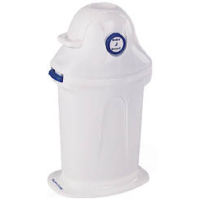 Not in full blown panic mode yet but nearing it. Time is both racing by and at a stand-still. I can't wait to meet little baby, but I am a lifetime away from being ready. So much to do and so little time. Jenn and I spent 4 hours on Saturday registering for baby stuff. Did we get registered for everything? Do we have a list as long as your arm? No. No. No. In point of fact, we spent 4 hours researching a bucket.
Are sweatshop workers exploited or are they rational maximizers?
Pressures to keep production costs as low as possible are being applied not just by the corporations that are setting up shop in these areas, but also by the consumers that buy their goods. A competitive marketplace in a global economy can be a double-edged sword. Our desire for low cost goods and the necessity for corporations to remain profitable and competitive create a system which feeds upon itself.
We desire cheaper goods. Companies need to make a profit in order to stay in business. In order for companies to meet the marketplace demand for lower cost goods and at the same time remain competitive and viable, it may become necessary to produce goods overseas, where labor costs are cheaper. This shift of manufacturing abroad translates into a loss of manufacturing jobs in
However, these newly created jobs in
Change is painful, and not always pretty. Capitalism and a free market economy, in my view, tend to make living conditions better overall for most people. However, as one group benefits from the relocation of jobs and factories, another group suffers. Ultimately, a free and open market levels the playing field - increasing the welfare of some of those who are poorest and, at the same time, decreasing that of some of those who were well off in the previous system.
 Are the people of
It is difficult to say whether or not
So what do these indicators mean in real terms for the people of
In the video it was clear that dairy production was decimated by the importation of dry milk. Likewise, many of the agricultural products (carrots, cabbage, and onions) which can be grown in
Exacerbating the country’s dire economic situation a severe island-wide drought (the worst in 70 years) struck in 1997 drastically reducing agricultural production.[3]
Making matters worse, at least in the short term, a division of the IMF has imposed stringent monetary and economic policies upon the government as preconditions for receiving loans. The IMF’s stated long term goal is to assist “member countries in implementing economic and financial policies that promote stability, reduce vulnerability to crisis, and encourage sustained growth and high living standards”.[5] According to the video, however, the IMF’s terms have caused massive hardships to date for many Jamaicans.
Michael Manley asserts in the video that it is important to consider who founded the IMF and whose interests and stability they are ultimately looking after. By opening up an economy to free trade the IMF aims to benefit its 184 member countries. Some of its member countries benefit more than others, however, and the voting within the organization is heavily skewed towards the more well-to-do member nations.[6]
It remains to be seen if free trade will make the people of
[1] http://en.wikipedia.org/wiki/Jamaica#Economy
[2] http://en.wikipedia.org/wiki/Economy_of_Jamaica
[3] http://en.wikipedia.org/wiki/Jamaica#Economy
[4] http://en.wikipedia.org/wiki/Jamaica#Economy
[5] http://www.imf.org/external/np/exr/facts/globstab.htm
[6] http://www.imf.org/external/np/sec/memdir/members.htm

If I were Mao Tse-Tung what would have been the first three things I would have done to support Communism?
The first of the three things I would have done to support the successful growth of Communism would be to start the transition slowly. To change from one system of government to another is a huge task that requires at least a somewhat measured, and well thought-out, progression. While the revolution may happen in a relatively short amount of time, I would try to take a step back once in power to let things settle down. Changes made in rash and hectic conditions, though perhaps undertaken with great fervor, are often only half thought out, giving them lower odds of success.
Next I would try to minimize the anger towards landowners in the rural communities. Specifically, I would ask the "hated" landowners to hand over their land peacefully and explain why it was in their best interest to do so. It seems that Mao found modest success with such a transition policy in the city, by explaining to factory owners that the only option for remaining with the company was to sign over the deed. When Mao had the peasants berate their former overseers and landowners, it encouraged a general animosity towards authority. To rule effectively one must try to bring all people together towards a common goal. When that goal is the destruction of a certain class of people you create a self-devouring form of government: the oppressed become the oppressors…overthrow... repeat. This strategy is a poor one for placing your own system of government into a lasting authoritative role.
Finally, Mao's attempt at controlling the marketplace was flawed. If I were in power and realized that China needed to double its production of steel, I would not address the problem by asking farmers, doctors and their wives and children to make steel in their spare-time. Rather, I would increase the output of existing factories to their maximum, and have a portion of the population involved in the building of newer steel factories. I would then invest in the education of the public with a heavy emphasis placed on math, science and technology, in an effort to create a population that would, eventually, allow China to leap past other nations through superior intellect and innovation.
 Just waiting for my wife to get ready before we head out for the evening. I have learned that when she says that she is just going to 'quick' throw on some make-up it really means -Sweetie, I am going to try on every piece of clothing I own. Throw them all on the floor in a large pile. Swear about how I don't own the right style of clothing and then end up putting on the same outfit I had on to start with... all the while forgetting to put on the make-up I discussed earlier.


 Unlike a haiku,


